


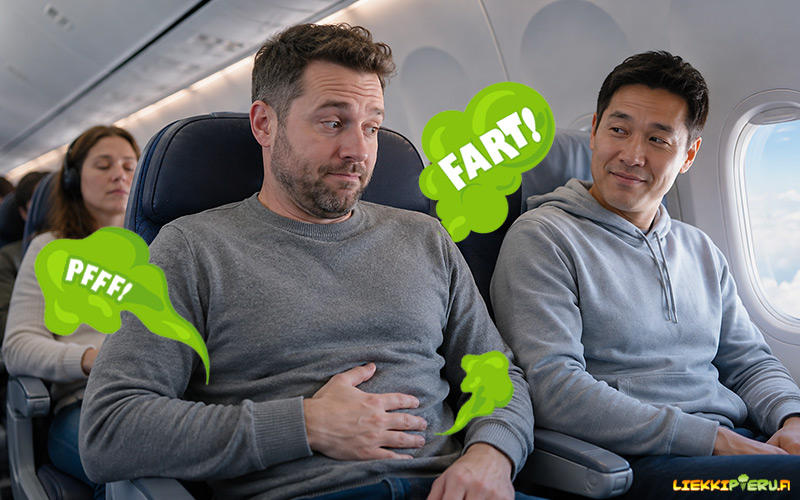
Why Do You Fart More on Airplanes?
You may feel the need to fart more often on an airplane because the cabin pressure is lower than the air pressure at ground level. As the surrounding pressure drops, the gas already present in your intestines expands. This can cause bloating, abdominal pressure and a growing need to release gas. Flying does not necessarily create a large amount of new gas in your digestive system. Instead, it allows the gas already there to take up more space. Sitting for long periods, eating quickly and drinking carbonated beverages can make the sensation even stronger.
What happens to intestinal gas on an airplane?
The cabin of a passenger aircraft is pressurized, but the air pressure is not maintained at the same level as it is at sea level. At cruising altitude, cabin conditions typically resemble those found at a considerably higher elevation. Even so, the cabin pressure remains at a safe level for most healthy passengers.
The behavior of gas can be explained by Boyle´s law. According to this principle, the volume of a gas increases as the surrounding pressure decreases, provided that the temperature remains roughly the same. The same effect can be observed in gas trapped in the ears, sinuses and digestive tract.
As the airplane climbs and the cabin pressure drops, intestinal gas expands. Your digestive system may contain the same number of gas molecules as it did before takeoff, but that gas now occupies more space. The result can be a tight or bloated feeling, a rumbling stomach or an urgent request for clearance from the body´s rear departure gate.
Where does intestinal gas come from?
Gas enters the digestive tract mainly in two ways. Some of it is swallowed air that enters the stomach while you eat, drink or talk. Most swallowed air leaves the body through belching, but some of it can continue into the intestines.
The other major source is the activity of bacteria in the large intestine. Not all carbohydrates in food are completely absorbed in the small intestine. When they reach the large intestine, gut bacteria break them down and produce gas in the process. Flatulence is therefore a normal part of digestion and does not necessarily mean that anything is wrong with your stomach or intestines.
Air travel does not put this natural process on hold. When gas produced during digestion meets the lower cabin pressure, the result can feel noticeably windier than it does on the ground.
Why can the discomfort get worse on a long flight?
Cabin pressure is not the only possible cause of bloating during a flight. What you eat and drink on the day of travel, as well as how long you remain seated, can affect the way your stomach feels.
- Carbonated drinks introduce gas into the digestive system and may increase belching and the sensation of bloating.
- Eating quickly can cause you to swallow more air, especially if you are talking while rushing through a meal.
- Chewing gum may also lead some people to swallow more air than usual.
- Foods that are difficult for you to digest can increase gas production in the intestines.
- Sitting for a long time can make bloating feel more uncomfortable and limit your ability to change position.
- Travel anxiety can affect digestion and make you more aware of abdominal symptoms.
Everyone reacts differently. One passenger may eat a bean-filled meal before departure and remain perfectly comfortable throughout the flight. Another may find that a single carbonated drink begins an internal check-in process. Your own experience is therefore a more useful guide than a long list of foods that everyone is supposedly expected to avoid.
Does a fart smell worse on an airplane?
Lower cabin pressure increases the volume of intestinal gas, but it does not automatically change its chemical composition or make it smell worse. The odor of a fart is mainly caused by small quantities of sulfur-containing compounds. Most of the gas produced in the digestive system is actually odorless.
A fart may still seem particularly powerful inside an airplane because passengers are seated close together in an enclosed space. The nearest nose may be only an armrest away, so the smell does not have far to travel. The aircraft´s ventilation system continuously circulates and filters cabin air, but it may not act quickly enough to save the person sitting beside you from the initial encounter.
How to reduce gas and bloating during a flight
You cannot completely prevent the need to fart on an airplane, nor is there any need to do so. However, a few simple steps may help reduce discomfort:
- Eat slowly before traveling. Eating at a calmer pace may help reduce the amount of air you swallow.
- Choose familiar foods. Travel day may not be the best time to experiment with a meal when you do not know how your stomach will react.
- Drink water. If carbonated drinks tend to make you feel bloated, still water is a simple alternative during the flight.
- Avoid chewing gum unnecessarily. Chewing gum can cause some people to swallow more air.
- Move around safely. On a long flight, you can occasionally stand up and walk when the seat belt sign is off and it is safe to move around the cabin.
- Wear comfortable clothing. A tight belt or waistband may make abdominal pressure and bloating feel even more uncomfortable.
- Use the restroom when necessary. A short walk and a more private space may help when the pressure inside starts requesting permission to land.
There is no reason to remove every gas-producing food from your diet because of a single flight. Many of these foods contain fiber and form part of a normal, balanced diet. However, if you already know that a certain food causes you significant discomfort, avoiding it immediately before flying may be a sensible choice.
Should you hold in a fart for the entire flight?
Holding in a fart for a short time is common, but doing so for a long period can increase pressure and discomfort. The expansion of intestinal gas may make this sensation more noticeable on an airplane. To learn more about what happens when you keep gas trapped inside, read Never Hold Your Farts.
In practice, the most considerate solution depends on the situation. If you can safely visit the restroom, it offers greater privacy. If moving around the cabin is not permitted, such as when the seat belt sign is illuminated, safety takes priority over any fart-related emergency. Most gas and bloating associated with flying are temporary and ease as cabin pressure returns to normal and you begin moving around again.
When should you discuss digestive symptoms with a healthcare professional?
A temporary increase in gas during a flight is usually harmless. However, it may be worth speaking with a healthcare professional if flatulence regularly affects your daily life or occurs together with persistent or recurring abdominal pain, prolonged bloating, diarrhea, constipation, unexplained weight loss or blood in your stool.
Flying can make an existing symptom more noticeable, but the flight itself cannot reveal the underlying cause. New, persistent or worrying digestive symptoms should therefore not be dismissed as nothing more than an airplane fart.
Even gas needs more room in the sky
The increased need to fart on an airplane is not simply a product of your imagination. As cabin pressure decreases, intestinal gas expands, while eating habits and long periods of sitting can add to the discomfort. You may be able to ease the situation by eating slowly, choosing foods that suit your digestive system, drinking water and moving around when it is safe to do so. If your stomach still starts up its own jet engine, the most likely explanation is ordinary physics and digestion sharing the same crowded cabin.


